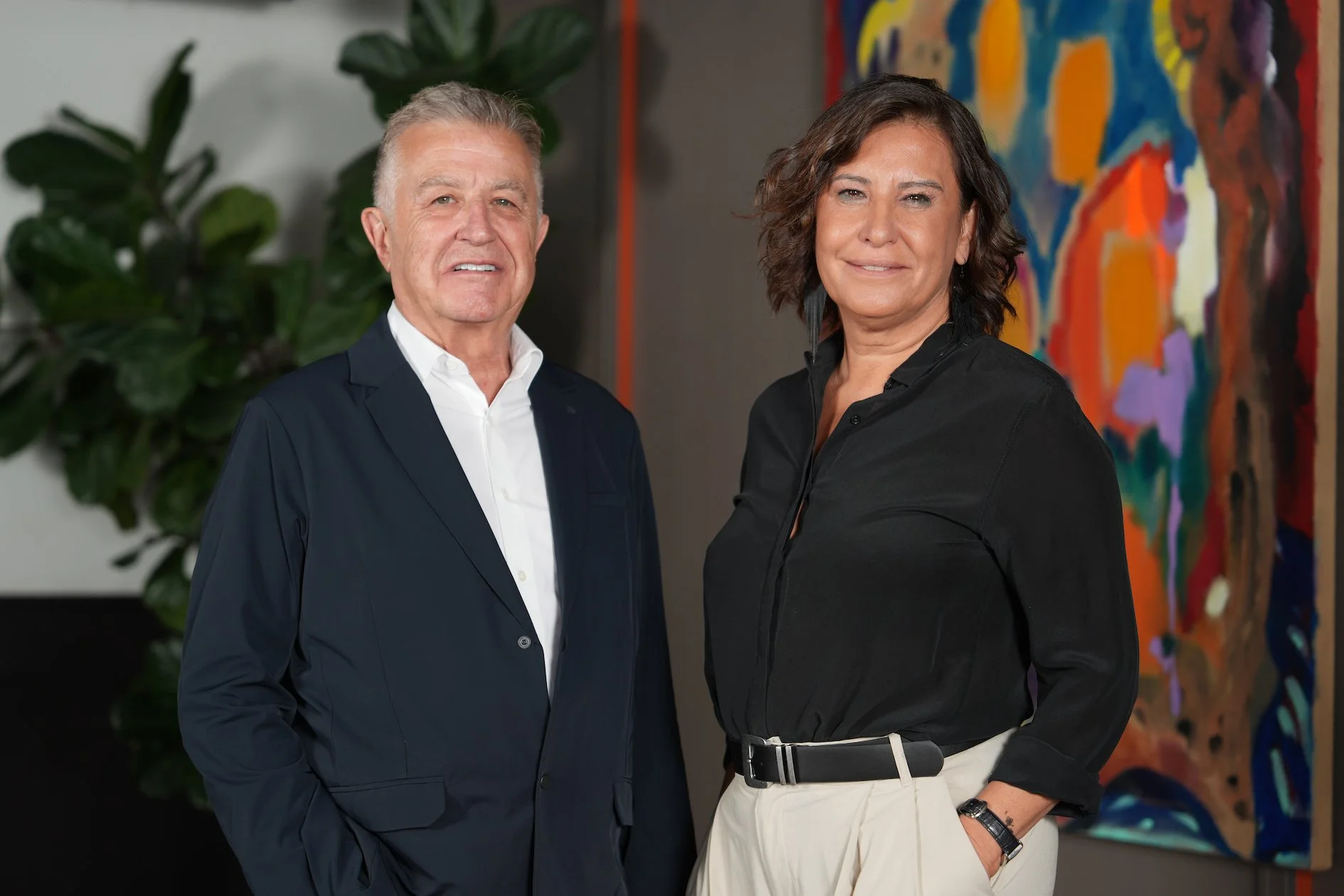
Ali and Rabia Güreli
TWO EYES, ONE CITY
Some couples build a home together. Ali and Rabia Güreli built an ecosys- tem.
For more than twenty-five years, theirs has been a conversation conducted through marriage, art, collecting and, eventually, a city. Their eyes are not identical—and that may be precisely the point. Ali looks with an instinct shaped early: an architect father, classical music, archaeology, proportion, light; later Paris, artists, galleries and the intoxicating proximity of a life lived inside art. Rabia looks longer. She questions. She notices the political, the social, the technological; she is drawn to black-and-white photography, digital practices and the places where art refuses to make itself immediate- ly understood. Somewhere between those two ways of seeing, a collection emerged.
And then came Contemporary Istanbul.
What began in 2006 as an audacious proposition—to create an internation- al contemporary-art fair in a city whose market was still finding its archi- tecture—has become something considerably larger. Ali speaks of building a market, creating connections and allowing Istanbul to act not merely as a bridge but as a cultural translator. Rabia speaks about what lies behind such ambition: the thousands of invisible decisions, details, crises and acts of responsibility required to turn a beautiful idea into something real.
Perhaps this is what makes the Gürelis particularly compelling. They are collectors who understand that collecting is not simply acquisition. They are founders who understand that institutions must eventually cease to belong to their founders. And they are a husband-and-wife team who have never needed to see the same thing in exactly the same way.
Their story is therefore not simply the story of an art fair.
It is the story of two eyes looking at the same world from different posi- tions—and deciding, year after year, to build something in the space be- tween them.
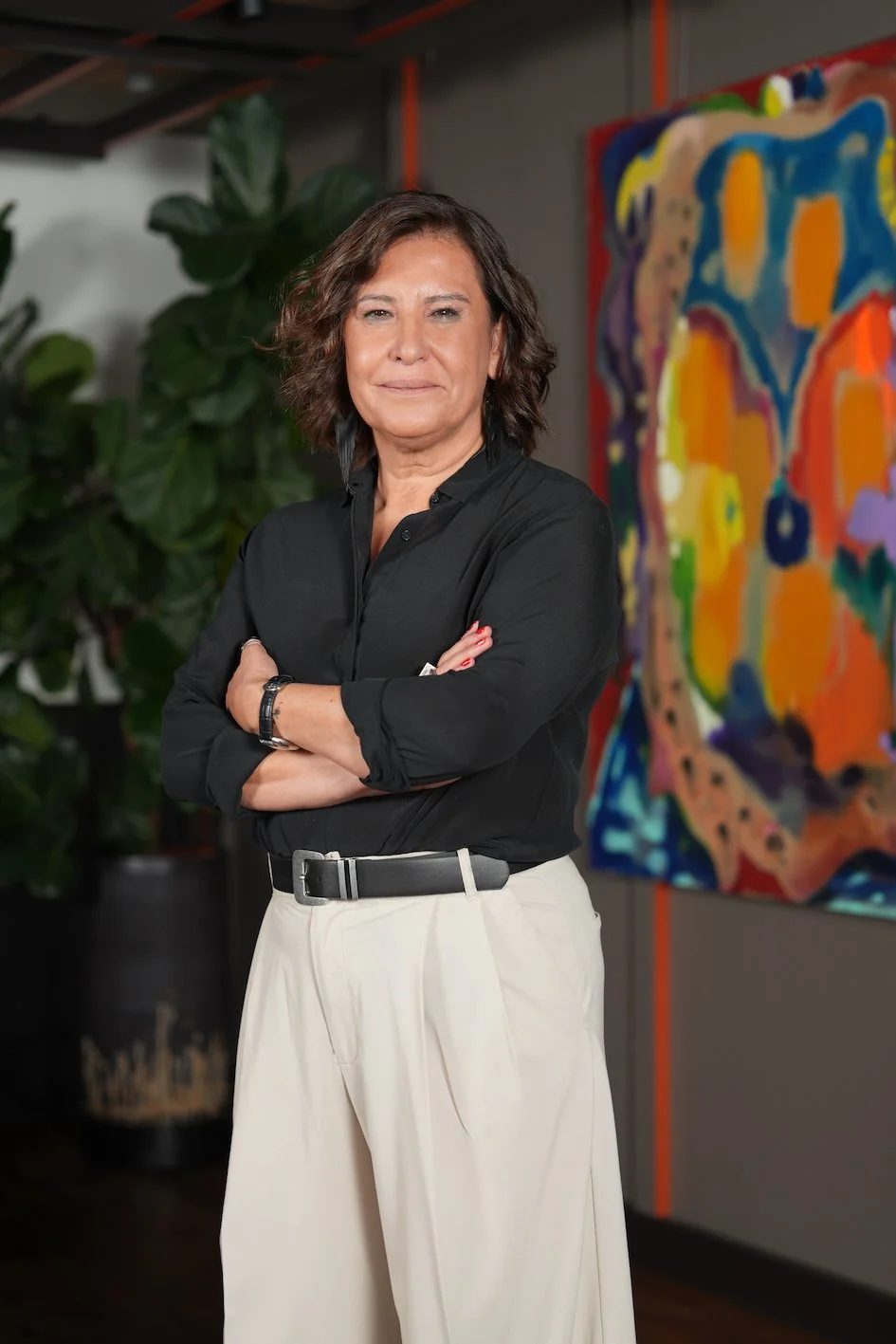
For Rabia Güreli, art seems to begin precisely where certainty ends. Not with the work that explains it- self, but with the one that leaves a question behind. Not with consensus, but with curiosity. And perhaps that explains a life spent simultaneously collecting art and helping construct the ecosystem around it.
For more than two decades, Güreli has occupied an unusual position within Istanbul’s cultural land- scape: part collector, part institution-builder, part observer, and, by her own admission, obsessive about the details. Alongside Ali Güreli, she has watched Contemporary Istanbul grow from the ambition of creating an international art fair into something larger — a recurring point of encounter between a city and the international art world. Yet she is refreshingly clear about what such things actually re- quire. Culture, she argues, is not produced by beau- tiful ideas alone; it exists because someone accepts the responsibility of making them real.
Her collecting follows a rather different logic. Here, instinct is allowed back into the room. Black-and- white photography, digital practices, politics, urban- isation, questions surrounding women and society: apparently disparate territories become connected through a fascination with how we live and how we change. Technology interests her when it becomes language rather than spectacle; artists interest her when they remain capable of risk; and collecting be- comes meaningful when it escapes the rationality of acquisition and becomes something closer to obses- sion. “A buyer buys an object,” she says. “A collector builds a relationship.”
There is also Istanbul itself — restless, complicated, impossible to reduce to another international art- world capital. Güreli does not believe the city needs to imitate London, Paris, Hong Kong or Dubai. Its challenge is more difficult and more interesting: to transform its extraordinary energy into continuity, and continuity into permanence.
Perhaps, after twenty years surrounded by fairs, art- ists, galleries, collectors, prices and institutions, the most revealing thing is what she has refused to lose: the possibility of encountering something she cannot entirely explain.
Because occasionally the information disappears. The market disappears. Experience disappears.
And there is simply a work.
And the desire to have it.
Art Talk Magazine: Rabia, Do you remember the first work—or perhaps the first exhibition—that made you understand that art was going to oc- cupy an important place in your life?
Rabia Güreli: I’m not sure there was one single moment. Art came into my life gradually, and then at some point I realised it had become part of the way I looked at everything; cities, people, politics, even everyday life.
Rabia Güreli
“Those are probably still my favourite moments... when knowledge loses and desire wins.”
What I do remember very clearly is the excite- ment of discovering something I didn’t immediately understand. I think that is still what attracts me to art today. I don’t necessarily want a work to explain itself to me. I like it when it leaves me with a question, or even makes me slightly uncomfort- able. Curiosity has probably been the constant thread in my relationship with art.
ATM: Where does Ali’s eye end and yours be- gin? And when the two of you fundamentally disagree, who usually wins?
RG: After all these years, sometimes even we don’t know where one eye ends and the other begins! But our instincts and tastes can actually be quite different, and I think that has been very healthy for both our collection and Contemporary Istanbul.
Ali can be more instinctive and decisive. I tend to look longer, ask more questions and sometimes obsess over the details. I’m also naturally drawn to digital art and works with a stronger political or social dimension.
There is a story that probably explains our dif- ferences better than I can. Once, I rehung the collection at home while Ali was away. When he came back, he looked around and said, “Rabia, everything is black and white!” And he was right. Without even realising it, I had filled the house with black-and-white photography and works that were almost entirely monochrome. I hadn’t noticed it at all until he pointed it out. That’s when you realise how instinctive taste really is.
We disagree quite often — which I think surprises people — but we have also learned that we don’t need to win every argument. Sometimes his eye makes me see something I would have missed, and I hope mine does the same for him.
And who wins? It depends on who wants it more! After more than twenty-five years of marriage, you learn to choose your battles.
ATM: What have twenty years of Contemporary Istanbul taught you about the invisible work required to make culture happen?
RG: That almost everything important is invisible.
People come to the fair and see the galleries, the artworks, the dinners, the collectors. They don’t see the thousands of emails, the budgets, the customs problems, the cancelled flights, the last-minute phone calls, the artist whose work is stuck somewhere, or the guest who suddenly needs something at midnight.
I have always been a details person. I can discuss the long-term strategy of Contemporary Istanbul in the morning and then worry about whether a guest can find their car in the evening. I don’t see those as two different jobs.
Twenty years have taught me that culture doesn’t happen because somebody has a beautiful idea. It happens because somebody takes responsibility for making that idea real.
ATM: What does Istanbul now need to do to become indispensable to the international art world?
RG: Istanbul doesn’t need to become another Lon- don, Paris, Hong Kong or Dubai. That would be a mistake. Its strength is precisely that it is none of those places.
When we started Contemporary Istanbul, much of our energy went into convincing people to come. Today the conversation is different. People already know Istanbul is extraordinary. The challenge is to give them reasons to return not once every five years, but every year.
That requires strong galleries, museums, foundations, collectors, artists, public institutions and, importantly, continuity. An art ecosystem cannot depend on one fair or one week in September. Istanbul already has the energy. What we need now is to turn that energy into something more permanent.
ATM: What connects digital art, black-and- white photography, urbanisation and artists dealing with women’s issues for you?
RG: At first they sound unrelated, but for me they are all about how we live and how we change. Cities change us. Technology changes us. The position of women changes societies. Photography can capture something that disappears a second later. I don’t collect according to categories, though. I have never said, “Now I need a digital work” or “I need another woman artist.” That would be terribly boring.
When I want to live with a work, there is usually an immediate emotional reaction first. Then the questions come. The works I love most continue to reveal something after years of living with them.
ATM: Has technology genuinely expanded what an artist can say, or has the art world occasionally become more fascinated by the technology than by the art?
RG: Both.
My interest in digital and new-media art goes back long before NFTs became fashionable. In fact, one of the early works I acquired was by Vera Molnár, from her pioneering computer-based work of the 1980s. What fascinated me was not the computer itself, but the fact that she was already using technology as an artistic language at a time when very few people were thinking about it in those terms. Since then, I have seen several waves of excitement around technology. Every time there is a new tool, people behave as if art itself has been reinvented. Technology can absolutely expand an artist’s language. AI will do that too. But technology alone doesn’t make an interesting artwork. The tool changes; the essential question doesn’t.
For me, the question remains very old-fashioned: What is the artist trying to say, and do I feel something? If the answer is only, “Look what this technology can do,” I usually lose interest quite quickly.
ATM: Have you seen a genuine redistribution of power toward women—or are we confusing
greater visibility with structural change?
RG: There has been real progress, and I don’t want to underestimate it. When I look around the art world today, there are many more women leading institutions, galleries, foundations and collections than when we started. But visibility and power are not the same thing. Being invited into the room is one thing; having the authority to make decisions in that room is another.
I have spent much of my professional life sitting at tables where I was one of very few women. That has changed. But structural change takes much longer than representation.
I think the next generation of women is also less willing to ask permission. That may ultimately be more transformative than any statistic.
ATM: How do you distinguish between an artist genuinely finding a language and one who has learned what the contemporary art system wants to see?
RG: Time.
The art world moves very fast today. An artist can become visible internationally almost overnight. Instagram, fairs and the market can accelerate a career enormously. But they cannot manufacture a serious practice.
With younger artists, I am interested in whether there is curiosity and whether the work is evolving. I don’t expect a 25-year-old artist to have found a definitive language. Actually, I would be suspicious if they had.
The interesting ones surprise you. They take risks. Sometimes they fail.
An artist who is only producing what the system already knows how to reward eventually becomes predictable.
ATM: What separates a collector from a buyer? Can someone be taught how to collect?
RG: A buyer buys an object. A collector builds a relationship.
And that relationship is not only with artworks. It is with artists, galleries, museums, other collec- tors, cities, ideas. Eventually you realise that your collection is telling a story about you, whether you intended it to or not.
Can you teach someone to collect? You can teach them how to look, how to research, how the market works. But I don’t think you can teach the irratio- nal part.
Every real collector I know has occasionally bought something they could not logically justify. You need a little obsession. Otherwise it is just shopping.
ATM: Does an art institution have a moral responsibility beyond art itself?
RG: Yes, but I also think we have to be careful not to pretend that art can solve everything.
After the earthquakes, when we worked with young people in Hatay, art was not going to rebuild their homes. We knew that. But it could create a space where they could meet, make something, express themselves and feel connected again. Sometimes that matters enormously. Institutions are part of society. We cannot talk about culture while pretending not to see what is happening around us.
At the same time, our responsibility is to do what we actually know how to do. For us, that means creating access, opportunities, dialogue and spac- es where culture can continue even in difficult circumstances.
ATM: When did you realise you were building an institution that might outlive you both?
RG: I don’t think there was a single moment. Contemporary Istanbul grew almost faster than we could understand it.
In the beginning, Ali and I were simply trying to create a good international art fair in Istanbul. Then galleries started planning their year around it, collectors started travelling for it, young people who had first visited as students returned years later as artists, curators or collectors.
That is when you understand that something no longer belongs only to you. The idea that Contemporary Istanbul could out- live us is not frightening to me. Actually, I think that is the point of building an institution. If everything stops when the founders leave, then you haven’t really built one.
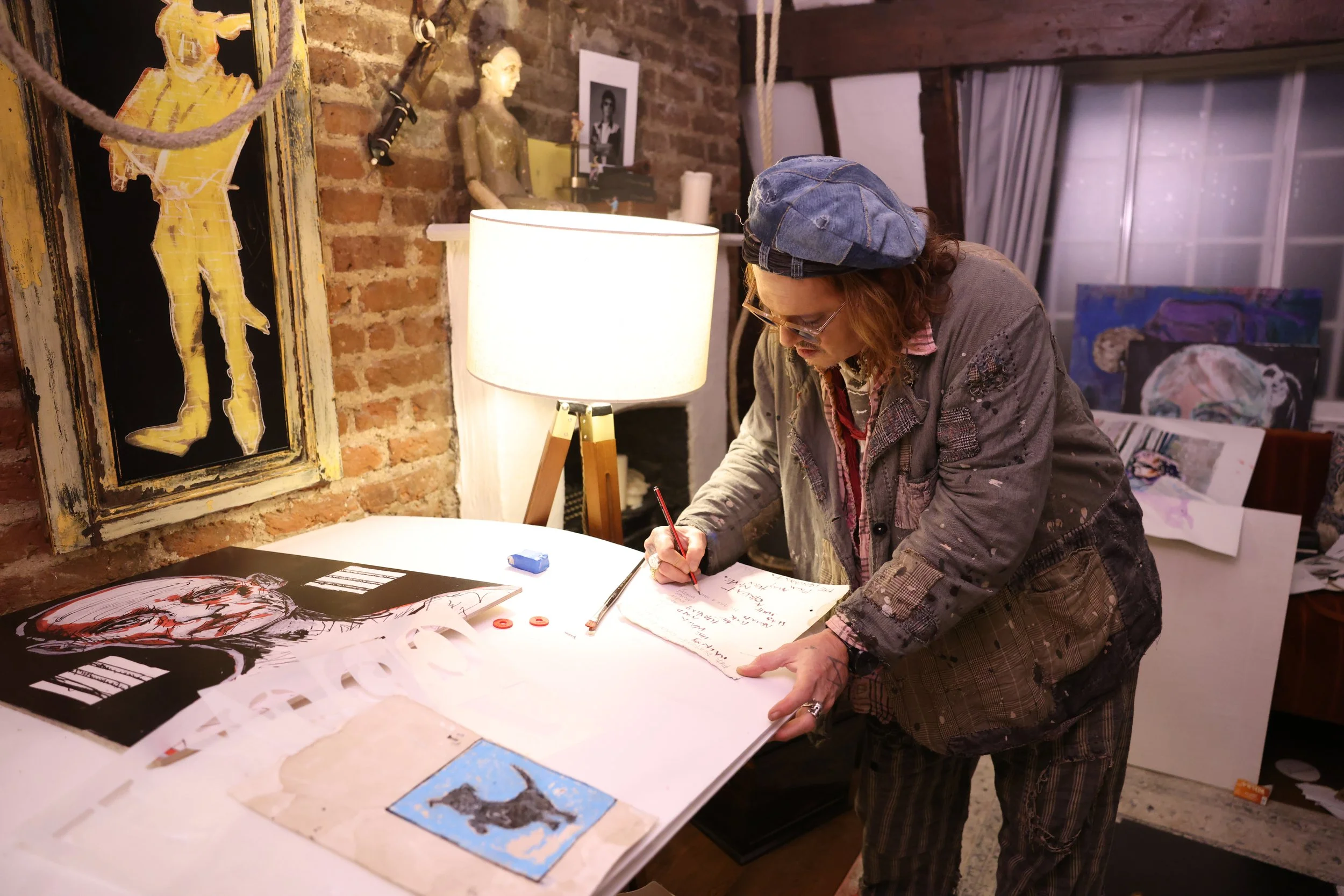
ATM: Can Rabia the collector ever silence Rabia the fair owner and simply say, “I don’t know why, but I need this”?
RG: Absolutely and thankfully!
I would be very unhappy if twenty years in the art business had trained that instinct out of me.
Of course I know much more now. Sometimes too much. I know the gallery, the market, the art- ist’s history, the prices, who is collecting what. All that information can become noise.
But every now and then I see a work and all of that disappears. Those are probably still my favourite moments when knowledge loses and desire wins.
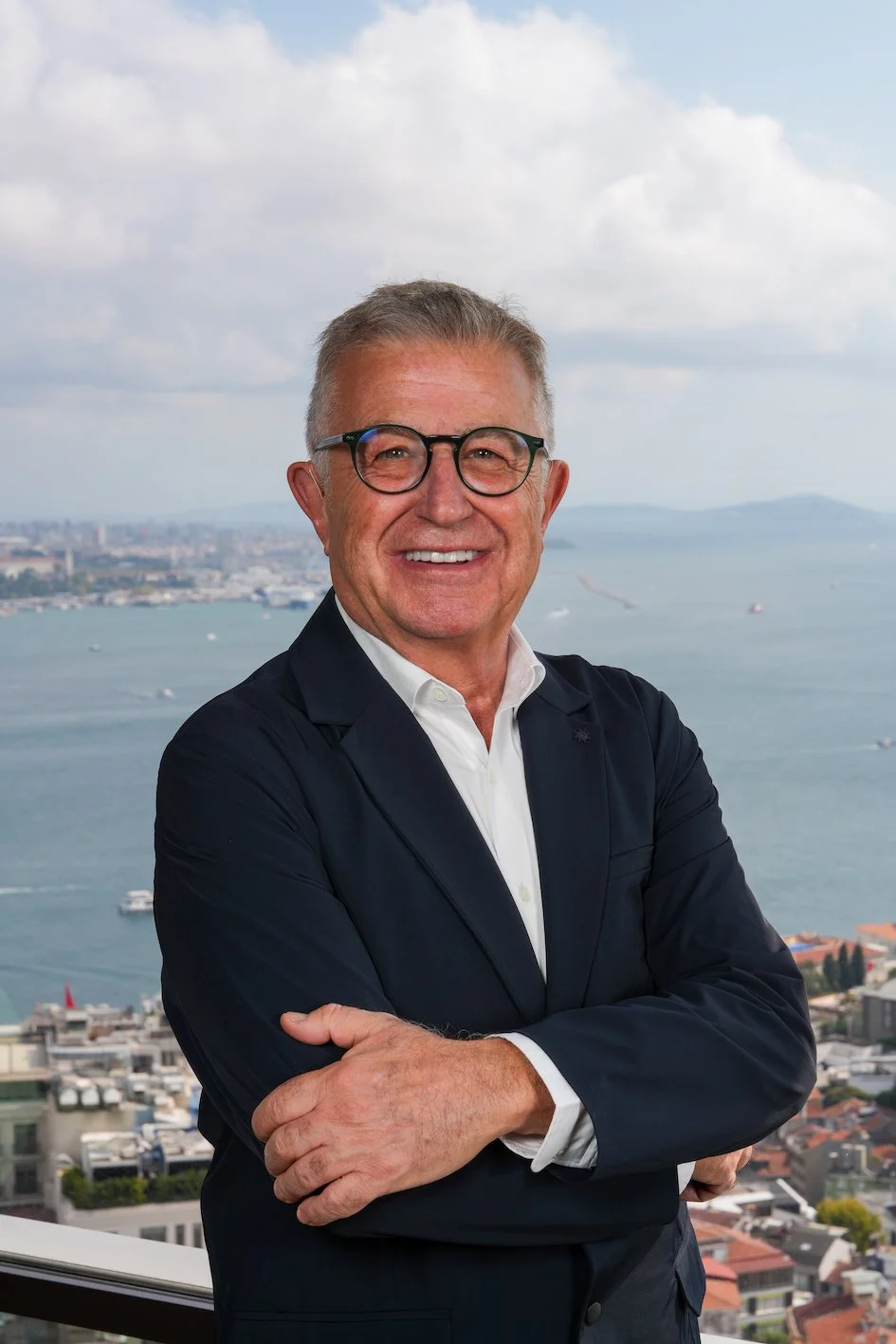
Ali Güreli
“A bridge connects two sides. A cultural translator allows something entirely new to exist between them.”
Ali Güreli has spent much of his life looking.
Before there were fairs, foundations, collectors or markets, there was an architect father teaching him to notice proportion, detail, space and light. There was classical music at home, weekends at the opera in Ankara, conversations about Rodin. Later came Paris: Komet, Abidin Dino, Mehmet Güleryüz, the newly opened Centre Pompidou, and an education that happened less in classrooms than in apartments, galleries and conversations.
Perhaps that explains something about Contempo- rary Istanbul.
Founded at a moment when Türkiye’s contempo- rary-art ecosystem was still finding its shape, the fair was never conceived simply as somewhere to sell art. Güreli imagined something more ambitious: a place capable of creating relationships, confidence, collectors and, eventually, a market. Twenty years later, he remains adamant that Istanbul should not imitate Basel, Frieze or Paris. Why would it? Few cit- ies contain so many histories without resolving them.
Güreli prefers to call Istanbul a cultural transla- tor. It is an important distinction. A bridge merely connects two sides; a translator listens to both, un- derstands difference, and allows something new to emerge between them.
That may also be the most revealing way to under- stand Güreli himself.
His story is ultimately not about building an art fair. It is about building the conditions in which encoun- ters can happen: between artists and collectors, Tür- kiye and the world, commerce and culture, history and the contemporary.
And perhaps that is what a great art fair should do. Not tell us where the centre is.
But make us question whether there was ever only one.
Art Talk Magazine: You grew up with an ar- chitect father, surrounded by classical music, archaeology, painters and sculptors. Before art became a profession, what did it teach you about how to look?
Ali Güreli: I think I learned to look at the world through art long before I ever thought of art as a profession. My father was an architect, so art and culture were simply part of our daily life.
In Ankara, we went to the State Opera and Ballet almost every weekend, classical music was always playing at home, and my father would talk to us about artists like Rodin. I grew up thinking that this was simply how one experienced the world. What stayed with me most was my father’s way of looking. He taught me to look at everything from the perspective of visual aesthetics, to notice pro- portion, detail, space and light. I still find myself
doing that instinctively.
ATM: You have described Paris in the early 1980s as a kind of artistic education—living among artists such as Komet, Abidin Dino and Mehmet Güleryüz. What did that period give you that a university education could not?
AG: University gave me a formal education, but Paris gave me something much more personal: the opportunity to live inside the art world. I lived in the same building as Komet, Mübin Orhon and Mehmet Nazım for two years, became close to Abidin Dino and Mehmet Güleryüz, and spent my days going to galleries, exhibitions and the newly opened Centre Pompidou. I was immersed in the artistic life of the city and had the opportu- nity to meet many artists and gallerists.
That kind of proximity was impossible to learn in a classroom. I wasn’t studying art formally; I was experiencing the art world from within—seeing how artists lived, thought and approached their work. Paris became my real education in art and the beginning of my lifelong relationship with it.
ATM: When you founded Contemporary Istanbul, Turkey did not yet have the contemporary-art ecosystem it has today. Can an art fair actually create a market, or can it only reveal and accelerate something that is already begin- ning to exist?
AG: I believe an art fair can build a market. When we founded Contemporary Istanbul, Türkiye did not yet have a fully developed contemporary art market. We created an art market in Istanbul. When we started in 2006, the contemporary art market in Türkiye was much smaller. There were fewer collectors and galleries, and the connec- tions with the international art world were more limited. Our ambition was to create a platform where the world could meet with Istanbul and Türkiye. Over the years, we saw new collectors emerge, galleries become more internationally connected, and Turkish artists participate more actively in international exhibitions and collabo- rations.
And we continue to build this ecosystem. We connect Turkish galleries that may not yet have the resources to operate internationally with the global art world, while creating space for new gal- lery-to-gallery collaborations, joint presentations and shared models that respond to today’s eco- nomic realities. For us, this is also part of making the ecosystem more connected and sustainable. So I would describe the role of a fair as both revealing and building. You reveal an existing cultural and creative potential, but by bringing people together repeatedly, you also create the relationships, trust and confidence that allow a market to develop. And in Istanbul, the city itself is a fundamental part of that process. Its history, geography and position between different cultural worlds give it a unique ability to bring people from different regions together. For us, network- ing has always been at the heart of this process. We saw Istanbul not simply as the location for the fair, but as an active force in creating connections between Türkiye and the international art world.
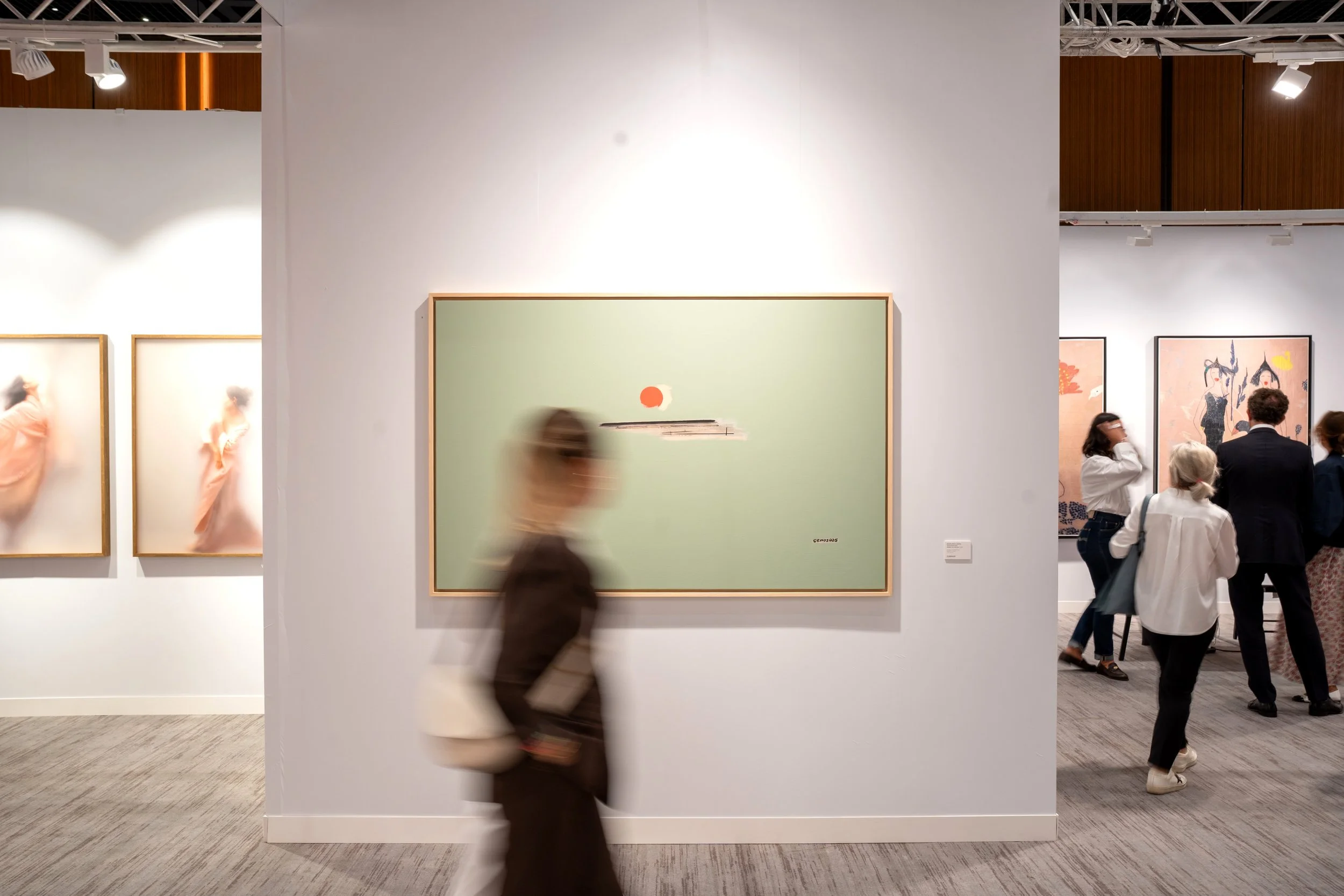
ATM: You have resisted the familiar description of Istanbul as a “bridge between East and West,” preferring to call it a “cultural translator.” What can Istanbul translate that perhaps no other city can?
AG: Istanbul has been shaped by centuries of ar- tistic production and cultural voices, influenced by different civilisations, cultures, religions and traditions. That accumulated history continues to shape how the city produces and experiences con- temporary art today.
Cultural translation extends beyond art. You expe- rience it through Istanbul’s architecture, gastrono- my, music, history and contemporary cultural life. At Contemporary Istanbul, we see the city itself as part of the cultural experience we create. Visitors come for the art, but they also encounter the city and everything that has shaped it.
Perhaps what Istanbul can translate better than anywhere else is how different cultures can coexist, influence one another and continue to produce something new over time. This is also what we try to reflect through Contemporary Istanbul: bring- ing different geographies together while allowing each to retain its own voice.
This is where Istanbul’s role as a “cultural transla- tor” becomes tangible. By bringing new galleries to Istanbul, we create opportunities for different art scenes to meet, learn from one another and build long-term relationships and collaborations.
ATM: Contemporary Istanbul has never tried simply to become another Basel, Frieze or Paris. After twenty years, what do you believe is unmis- takably Istanbul about the fair—not geographi- cally, but intellectually?
AG: We are doing something that belongs to Istan- bul. We are not trying to copy Basel or Frieze. You see it in the artists and galleries we bring together, in the conversations we create, and in the way the fair connects Europe, the Middle East and Asia. What is unmistakably Istanbul about the fair is its ability to bring different worlds together. Istanbul has always been a meeting point of cultures and histories. Istanbul has always been a city of layers and constant exchange. Its contemporary culture reflects that complexity. We do not try to simplify these different influences into one identity; instead, we allow them to coexist and create new conver- sations.
I also think the complexity of the region we live in has given us a certain resilience, discipline and adaptability. Istanbul is surrounded by a geography that is constantly changing, and you cannot oper- ate here by simply following a fixed formula. You have to adapt, remain curious and keep evolving. Over more than 20 years, we have held the fair continuously, without interruption. That continu- ity itself reflects our ability to adapt to changing circumstances while remaining committed to our long-term vision.
As the region continues to change and evolve, it is equally important for us to highlight the cut- ting-edge artistic practices emerging from Tür- kiye and the wider region. As a major art centre within this geography, Istanbul has a responsibility to bring this innovative artistic production into dialogue with the international art world.
And then there is the unique experience that Is- tanbul itself offers. We are holding the fair within Tersane Istanbul, a former Ottoman shipyard with a 600-year history, on the Golden Horn. There are very few places where you can encounter contem- porary art within a setting that carries this depth of history, while at the same time being immersed in the energy of a living, contemporary city.
ATM: Art fairs exist within an unavoidable con- tradiction: they are places of discovery, conversa- tion and cultural exchange, but also marketplac- es. How do you preserve curiosity and meaning in an environment ultimately structured around buying and selling?
AG: I have been a collector for many years, and I don’t believe the commercial side necessarily has to be separate from the experience of art. Collecting can itself be a deeply personal and meaningful way of engaging with artists and their practices.
At the same time, Contemporary Istanbul is built around two complementary structures: Art mar- ket oriented fair and the non-profit work of the Contemporary Istanbul Foundation. Alongside the galleries and commercial programme, the Foun- dation develops curatorial exhibitions, talks, edu- cational initiatives and public art projects. These programmes create space for discovery, dialogue and critical engagement beyond the act of buying and selling.
For us, the two sides are not contradictory but com- plementary. The commercial dimension sustains the art market, while the Foundation’s non-prof- it programmes broaden the cultural experience around it. Together, they allow Contemporary Istanbul to function not only as a marketplace, but as a wider platform for artistic exchange and cultural dialogue.